
Loading...
Serving Glenview, IL and surrounding areas. (224) 529-2097
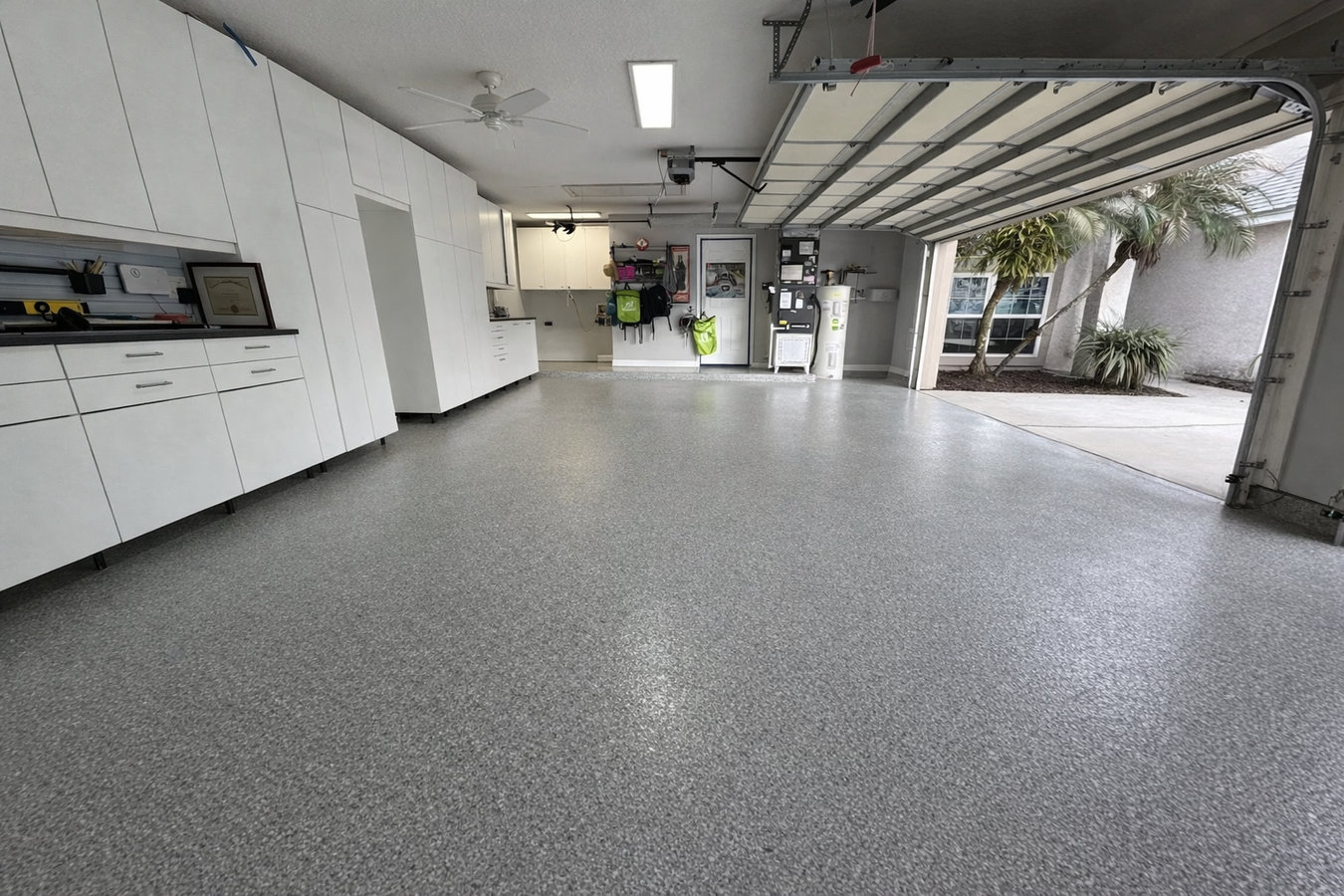
Your garage floor takes a beating every winter. We pour reinforced concrete slabs built for Glenview weather - with the right base, the right mix, and the right slope so water runs out, not in.
Garage floor concrete in Glenview means removing your old slab, compacting the ground and laying a gravel base with a moisture barrier, and pouring a reinforced concrete slab built to handle Illinois winters - most jobs take one to two days of active work, with a 7-day wait before you can drive on it again.
Most Glenview homeowners reach this point after years of patching cracks that keep coming back. The clay soil under many North Shore homes shifts through wet and dry seasons, and that movement eventually wins. When the floor is flaking, uneven, or pooling water, a new slab is the answer - not another round of filler.
If you are also thinking about upgrading the look of the finished surface, we can pair a new slab with our decorative concrete finishes, including epoxy coatings and stamped overlays that are applied once the slab has fully cured.
If you have patched the same cracks before and they keep reopening, the slab is moving in ways that filler cannot fix. In Glenview, this pattern is usually driven by clay soil shifting under the slab through wet and dry seasons. Repeated cracking means the slab needs to be replaced, not patched again.
When the top layer starts chipping off in thin flakes or the surface feels rough and crumbly, that is called spalling. In Glenview, this is almost always caused by road salt and freeze-thaw cycles eating into an unprotected surface. Once spalling covers a large area, the floor cannot be restored - replacement is the practical answer.
If part of your garage floor sits noticeably lower than the rest, or you can feel a slope when you walk across it, the ground underneath has settled unevenly. This is a structural issue, not just cosmetic - it can prevent your garage door from sealing properly and cause water to pool in low spots.
A properly installed garage floor slopes slightly toward the door so water drains out. Puddles sitting on your floor after rain or after pulling in a snow-covered car suggest the slab has settled out of level - or the original slope was never right. Standing water accelerates concrete damage and keeps working its way into the soil beneath.
Every garage floor project we take on in Glenview starts with demolition and subgrade work, not just the pour. We break out and haul the old slab, compact the soil, lay gravel, and install a plastic moisture barrier before any concrete is placed. For most homeowners, we pour a 4-inch reinforced slab - steel rebar or welded wire mesh embedded inside - with control joints tooled at the right intervals so any future movement stays hidden rather than running randomly across the surface. When heavier vehicles or equipment loads are involved, we can go to 5 or 6 inches. If you want to protect the finished surface from road salt and moisture, our decorative concrete team can apply an epoxy or polyurea coating after the slab cures.
For homeowners whose floor issues extend beyond the garage itself, we also handle concrete floor installation for interior spaces - basements, workshops, and utility areas - using the same preparation and mix standards as our garage work. Every project includes permit handling through the Village of Glenview, so the work is on record and inspected.
Suits most single- and two-car residential garages with typical passenger vehicle loads.
Suits homeowners who park trucks, RVs, or heavy equipment and need extra load-bearing capacity.
Suits Glenview homeowners who want long-term defense against road salt, oil, and moisture after the slab cures.
Suits homeowners extending a project to a basement workshop, utility room, or accessory space adjacent to the garage.
Glenview sits in USDA Hardiness Zone 5b and goes through roughly 130 freeze-thaw cycles per year. Every time water gets into a small crack or surface pore, freezes overnight, and thaws the next afternoon, it expands and widens the gap a little more. A garage floor that would last 30 years in a milder climate may deteriorate in half that time here if it was not poured with air-entrained concrete, cured correctly, and sealed against road salt. Most of Glenview's housing stock was built between the 1950s and 1980s, which means a large share of original garage slabs are now 40 to 70 years old - well past the point where patching makes economic sense.
The clay soil under most North Shore properties adds another layer of complexity. Clay swells when wet and shrinks when dry, putting pressure on concrete slabs from below through every wet spring and dry summer. A gravel base and proper compaction are not optional extras here - they are what separates a slab that cracks in three years from one that holds up for three decades. We also pull every required permit through the Village of Glenview, which matters when you sell and the buyer's inspector is looking for unpermitted work. We serve homeowners throughout Glenview and into neighboring communities, including Skokie, IL and Evanston, IL, where soil and climate conditions are nearly identical.
Reach out by phone or through the contact form and we will respond within 1 business day. We will ask a few quick questions - garage size, current slab condition, and what problems you are seeing - to prepare for the site visit.
We come out to walk the garage, assess the existing slab, and check for soil movement or drainage issues. You will get a written quote that breaks down the work and cost - no obligation to move forward.
Once you approve the estimate, we pull the Village of Glenview building permit - this typically takes a few days to a week. You do not need to visit the permit office. We schedule your start date once the permit is in hand.
We demolish the old slab, compact and prep the base, then pour and finish the new concrete in a single day for most two-car garages. Plan to keep the garage clear for at least 7 days after the pour before parking vehicles on the new floor.
Free estimate, no pressure. We respond within 1 business day.
(224) 529-2097We use air-entrained concrete mix formulated for freeze-thaw durability, paired with compacted gravel base and moisture barrier on every job. These are the steps that determine whether your floor survives 10 Glenview winters or starts flaking after the third.
Every garage floor project we do in Glenview is permitted through the Village of Glenview before work begins. Unpermitted flatwork can surface during a home sale and create real headaches - we make sure your project is on record and inspected so that does not happen to you.
Puddles forming every time you pull in a wet car are a sign the original floor was never sloped correctly, or has settled. We form the slab with the right pitch toward the door so water drains out the way it should. The American Concrete Institute recommends a minimum slope for garage floors for exactly this reason.
We work throughout Glenview and the surrounding North Shore communities, from the postwar ranch neighborhoods near the village center to newer builds in The Glen. We know the soil conditions, the permit process, and the winter patterns that affect concrete here - not just the general rules.
Our focus on base preparation and proper mix design is what separates a garage floor that holds up through decades of North Shore winters from one that needs attention in five years. Every detail - from the gravel depth to the control joint spacing - is chosen for Glenview conditions specifically.
Transform your new slab or an existing surface with stamped patterns, staining, or a protective epoxy coating.
Learn MoreInterior concrete floors for basements, workshops, and utility areas poured to the same prep and mix standards as garage work.
Learn MoreSpring and fall booking windows fill fast - reach out now for a free written estimate and lock in your project date.