
Loading...
Serving Glenview, IL and surrounding areas. (224) 529-2097
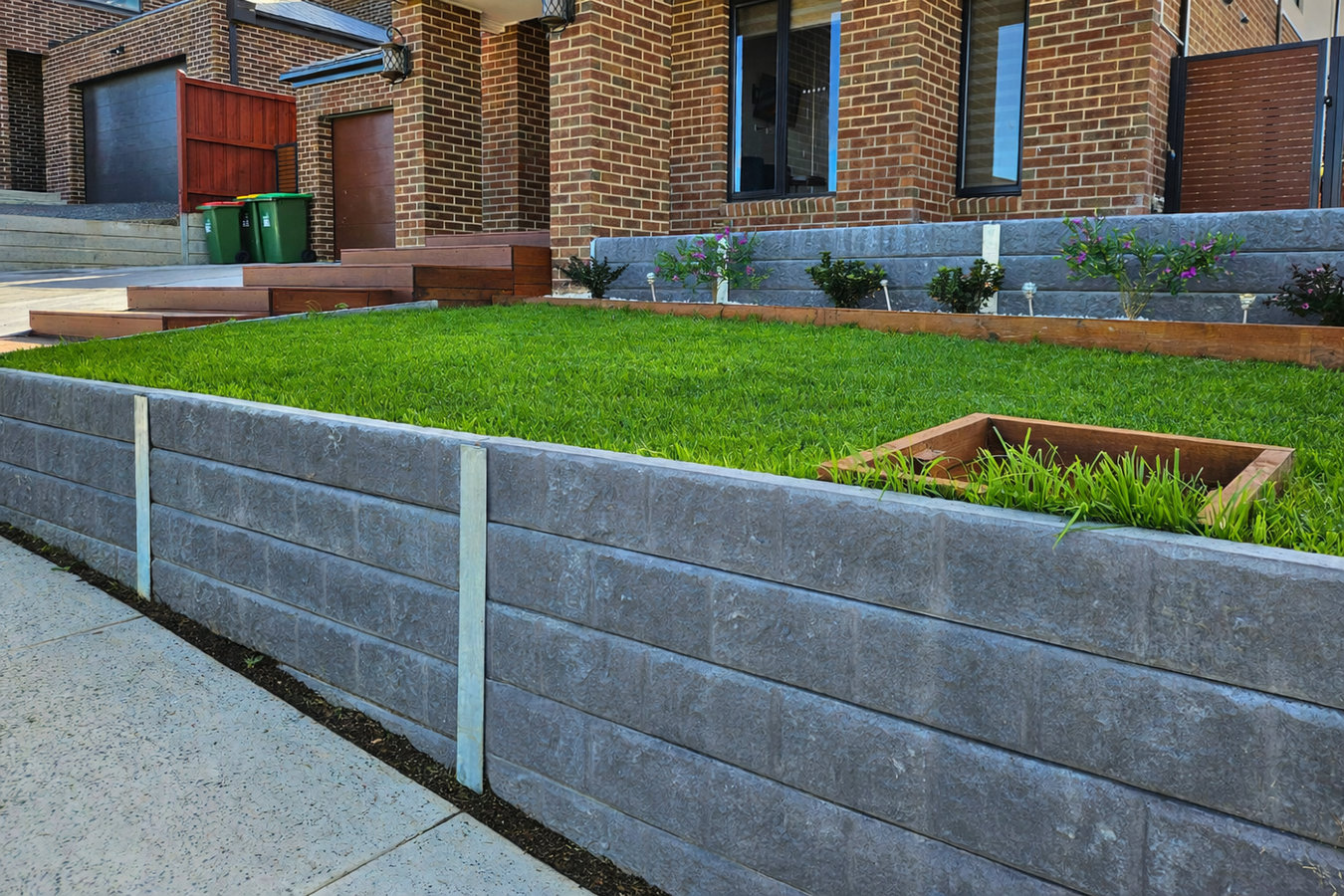
Your slope is moving, washing, or pushing against your home. We build concrete retaining walls that hold the line through Glenview winters.
Your slope is moving, washing, or pushing against your home. We build concrete retaining walls that hold the line through Glenview winters.
Concrete retaining walls in Glenview hold back soil on slopes and elevated areas so it does not slide, wash away, or push against your home's foundation, most residential projects take two to five days and include full drainage installation behind the wall.
If you have a slope that erodes after every spring rain, a yard edge that has been creeping toward your driveway, or an older block wall that has started leaning, a properly built concrete retaining wall ends that cycle permanently. Glenview's heavy clay soils hold water and push harder against walls than sandy soils would, which is why the drainage system behind the wall matters as much as the wall itself.
Many homeowners we hear from have also been thinking about concrete floor installation alongside a retaining wall project - both involve managing how water moves around the home and protecting surfaces from Glenview's freeze-thaw cycle.
After heavy rain, if you notice soil, mulch, or gravel migrating downhill and collecting near your foundation or driveway, your slope is eroding. Glenview's spring rains and snowmelt accelerate this significantly. Left alone, erosion can undermine your foundation or create drainage problems far more expensive to fix than a retaining wall.
If your current wall is tilting away from the slope, showing horizontal cracks, or pulling away from adjacent sections, it is under more stress than it was designed to handle. Glenview's clay soils and freeze-thaw winters are common causes. A leaning wall does not fix itself - the longer you wait, the more likely it is to fail completely.
Standing water collecting against your home's foundation after a storm often means poor grading or an eroding slope is directing water toward the house instead of away. In Glenview, where spring rain totals are significant, this is a pattern worth taking seriously. A retaining wall combined with proper grading can redirect that water before it becomes a basement problem.
When soil on a slope pushes against the edge of a paved surface, the pavement starts to crack and crumble at the margin. This is common on Glenview properties where driveways run alongside a grade change. A retaining wall along that edge protects the paved surface and extends its life.
We build poured concrete walls and concrete block retaining walls, and we handle drainage grading and backfill on every project. Poured walls are monolithic and extremely strong - a good fit for taller slopes or properties with significant soil pressure. A block retaining wall uses interlocking units that are easier to repair in sections, which suits moderate grades or tight-access sites.
For homeowners with larger slopes, tiered retaining systems break a tall grade change into two or more shorter walls, reducing load on any single structure and creating flat terrace space in the process. We also pair retaining walls with concrete steps construction when homeowners need a way to move between levels on a terraced yard. And when the main issue is water - not just slope - we combine the wall with grading and perforated drain pipe to redirect runoff away from your home's foundation.
Best for homeowners who want a monolithic, high-strength wall with a clean finish. Ideal for taller walls and properties with significant slope or soil pressure.
Well suited for homeowners who prefer a segmental look or need easier future repairs. Interlocking block courses handle moderate slope heights and work well in tight access situations.
A good fit for homeowners with large slopes who want to break a tall grade change into two or more shorter walls, reducing load on any single wall and creating usable terrace space.
For homeowners whose primary problem is water pooling or eroding slopes - retaining structure combined with proper grading and drainage pipe installation to redirect runoff away from the home.
Glenview sits on glacially deposited clay soils that hold water instead of draining it. After a heavy rain, the soil behind an undersized or poorly drained wall becomes saturated and extremely heavy, pushing against the wall far harder than sandy or loamy soil would. The Chicago metro's freeze-thaw cycle compounds this - water gets into any gaps in the structure, freezes, expands, and repeats all winter. For retaining walls specifically, that means the footing depth and drainage design matter more here than in warmer climates. Walls built without accounting for these local conditions start cracking within a few winters. You can learn more about retaining wall best practices from the Portland Cement Association.
Many Glenview properties - especially those near ravines or built on rolling terrain - have slopes that make portions of the yard unusable. A retaining wall can turn wasted slope into flat, functional space for a patio, garden, or room for kids to play. We serve homeowners throughout Glenview, including nearby Skokie and Des Plaines, where similar clay soil and frost-depth challenges apply. We also handle the Village of Glenview permit process on your behalf - from application through inspection, so you do not have to navigate that paperwork yourself.
We will ask about wall length, height, and what is on the slope above. We respond to every inquiry within one business day and schedule an on-site visit for most projects before giving any numbers.
We walk the site with you, check soil conditions and drainage, and assess access for equipment. A written, itemized estimate follows - labor, materials, and any permit fees shown separately.
For most Glenview retaining wall projects, we submit the permit application to the Village of Glenview Building Division on your behalf. Plan for one to three weeks for approval before work begins.
Utility lines are marked through JULIE before any digging. The footing goes in below the frost line, the wall goes up with gravel drainage backfill packed behind it, and we walk you through the finished project before we leave.
Free estimate, written quote, no obligation. We respond within one business day.
(224) 529-2097Glenview's ground can freeze to roughly 42 inches in a hard winter. Every footing we pour goes deep enough that frost heave cannot push it upward. This single detail is what separates a wall that lasts from one that starts tilting within a few years.
Glenview's clay soils hold water and push hard against retaining walls after rain. We install gravel backfill and drainage pipe behind every wall so water escapes rather than building up. Proper drainage is not optional here - it is what keeps the wall standing.
We submit and manage the Village of Glenview permit application on your behalf. You get a project that is built legally, inspected, and documented - which matters when you sell and when something needs a warranty claim.
Every estimate we provide breaks down labor, materials, and permit fees in plain language. You know exactly what you are paying for before anyone picks up a shovel, and the number does not change when the invoice arrives.
The American Concrete Institute sets the standards that govern how retaining wall footings and concrete construction should be specified and built. We follow those standards on every project, which is why our walls perform the same way in year ten as they did in year one.
Basement and garage floor pours with moisture barrier and salt-resistant sealer for Glenview homes.
Learn MoreNew and replacement concrete steps that connect yard levels and pair with retaining wall terraces.
Learn MoreSpring is the busiest season for retaining wall work - reach out now and lock in your project before the schedule fills.