
Loading...
Serving Glenview, IL and surrounding areas. (224) 529-2097
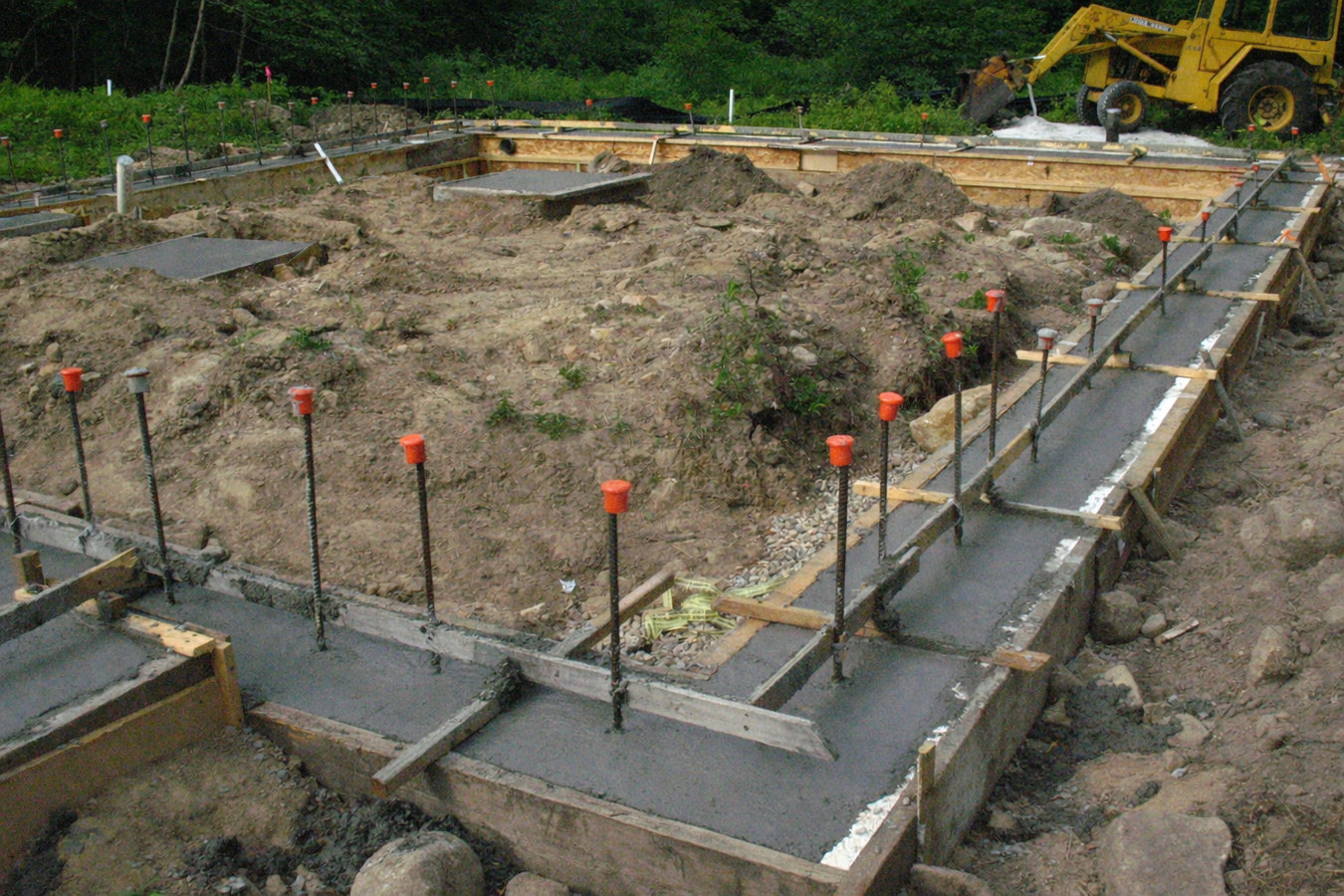
Footings poured above the frost line will shift with Glenview's winters. We dig to 42 inches, set reinforced concrete, and coordinate the Village inspection before the pour - so your deck or addition stays level for decades.
Concrete footings in Glenview means digging holes or trenches to at least 42 inches below grade to get below the frost line, setting steel reinforcement inside temporary forms, coordinating the required Village inspection before the pour, and then placing and curing the concrete - most residential deck or addition footing jobs take two to five days of physical work plus one to two weeks for permitting.
A footing is the wide concrete pad buried underground that holds up whatever is built above it - a deck post, an addition wall, a porch column. Without a correctly sized and properly placed footing, the structure above will shift with the seasons. Glenview's glacial clay soil expands and contracts with every wet-dry cycle, and that movement will find any weakness in a footing that was sized, placed, or poured incorrectly.
If your project is a larger structure that also requires a full concrete floor, our foundation installation service covers the complete foundation system - footings, walls, and slab - and can be scoped as a single project.
If there is a gap opening up between your deck and the house, or your front steps have started to tilt away from the door, the footings underneath may have shifted. In Glenview's clay soil, this kind of movement is common after several years of wet winters and dry summers. It does not always mean the whole structure needs to come down, but the footings need to be assessed before the problem gets worse.
Hairline cracks in concrete can be normal, but cracks that are widening, running diagonally, or appearing in a stair-step pattern along a wall are often a sign the footing underneath has moved. In older Glenview homes - especially those built in the 1950s through 1970s - original footings may not have been deep enough to handle decades of freeze-thaw cycles in clay soil.
Any new structure attached to your home or sitting on your property needs proper footings before construction begins. If you are getting quotes for a deck, sunroom, garage, or large pergola, the footing work is the first step - and it needs to be done right before anything else can be built on top of it.
When a footing shifts, it can transfer that movement to the framing of your home. If a door near your deck or an addition has started sticking, or if you notice gaps forming around window frames in that area, it is worth having someone look at the footings as a possible cause rather than just adjusting the door hardware.
We install concrete footings for decks, porches, home additions, outbuildings, fences, and retaining walls throughout Glenview. Every job starts with a site visit to assess the access, soil conditions, and the structure being built. We apply for the Village of Glenview building permit, handle the required pre-pour inspection, and dig to at least 42 inches below grade on every footing in order to clear the local frost line. Steel rebar goes into the forms before the pour to give the concrete the tensile strength it needs to resist clay soil movement over decades. We protect fresh pours from temperature extremes - insulating blankets in cold weather, wet curing in summer heat - and give you a specific timeline before framing can begin.
When your project requires both footings and a full slab on top of them, we coordinate that as part of the same job - the foundation installation combines the footing system and the slab into one continuous scope. This is the right approach for additions, garages, or accessory buildings where the footing and floor need to work together as a unit. We also handle standalone footing work for deck builders, framers, and homeowners who manage their own general contractor relationships.
Suits homeowners building or replacing a deck, porch, or pergola who need properly permitted, frost-depth footings before the frame goes up.
Suits homeowners adding a room, garage, shed, or accessory structure who need load-bearing footings that meet current Village of Glenview requirements.
Suits homeowners building a concrete or block retaining wall on a slope or grade change where the base footing needs to handle lateral soil pressure.
Suits homeowners with an existing structure whose original footings are shallow or failing, requiring new footings to be added alongside the old ones.
The Chicago area frost line sits at 42 inches - one of the deepest requirements in the continental United States. That means every footing in Glenview has to be dug more than three feet down before any concrete is poured. More digging means more labor, more time, and more soil to remove, so footing quotes in Glenview will run higher than what national cost guides suggest. The clay-heavy glacial soil under most of the village adds another layer of complexity: clay expands when it absorbs water and contracts when it dries, a cycle that repeats every season. Footings that are not wide enough, deep enough, or reinforced correctly will shift over time as that clay moves around them. A large share of Glenview's housing stock was built between the 1950s and 1980s, and many footings from that era were poured to standards that have since been updated - if you are adding to an older home, your contractor should assess the existing footings before assuming they can carry new weight.
We work throughout Glenview and the nearby communities on the North Shore. In Evanston and Skokie, homeowners face the same frost depth and clay soil conditions, and our permitting process adapts to each municipality's specific inspection requirements. If you are not sure whether your project needs new footings or whether the existing ones are adequate, the on-site estimate is the right starting point.
We respond to all new project inquiries within one business day and schedule a free on-site visit. Footing work is hard to quote without seeing the access, soil, and what is being built - a visit takes 30 to 60 minutes and gets you a firm written price.
After you approve the estimate, we apply for the Village of Glenview building permit. Most permits are issued within one to two weeks. We also call 811 before any digging starts to have underground utilities marked - this is required and protects your property.
The crew digs to at least 42 inches, sets steel reinforcement in the forms, and then calls for the required pre-pour Village inspection. The inspector verifies depth and placement before anything gets covered up. This inspection usually happens within a day or two of the request.
Once the inspection is approved, we pour the concrete and protect it from temperature extremes while it cures. We give you the specific waiting period before framing or loading can begin. The work area is cleaned up and the site is ready for the next phase of your project.
Free on-site estimate. We handle the permit, the inspection, and the pour.
(224) 529-2097We dig every footing in Glenview to at least 42 inches below grade - the local frost line requirement. There are no shortcuts here, because a footing above the frost line is a footing that will move. That 42-inch standard is why the American Concrete Institute emphasizes proper frost-depth compliance as the foundation of any residential footing project in cold climates.
The Village of Glenview requires an inspection before the pour on permitted footing work, and we schedule it as a standard part of every job - not an afterthought. An inspection means an independent set of eyes confirms the depth and placement are correct before the concrete covers everything up. That record protects you at resale and with insurers.
Glenview's glacial clay moves with moisture year-round. We account for that in how we size, place, and reinforce every footing - not just how deep we dig. Homeowners who have had footings move under older structures tell us the original crew clearly did not understand the soil here. We do.
Spring and early summer are the busiest season for footing work in Glenview. We coordinate permit applications, inspection scheduling, and pour dates together so your project moves in sequence. We also give you the exact curing timeline before framing can start - no guessing, no delays caused by a missed inspection window.
Footings are invisible once the project is done, but they are the reason everything above them stays level and solid for decades. We treat footing work as the most important part of any project we take on - because it is.
Lifting and releveling settled foundations in Glenview when the original footings have shifted and the structure needs to be restored to grade.
Learn MoreFull foundation systems - footings, walls, and slab - for additions, garages, and new structures that need a complete below-grade assembly.
Learn MoreSpring slots fill fast - contact us now to get on the schedule before the season gets away from you.