
Loading...
Serving Glenview, IL and surrounding areas. (224) 529-2097
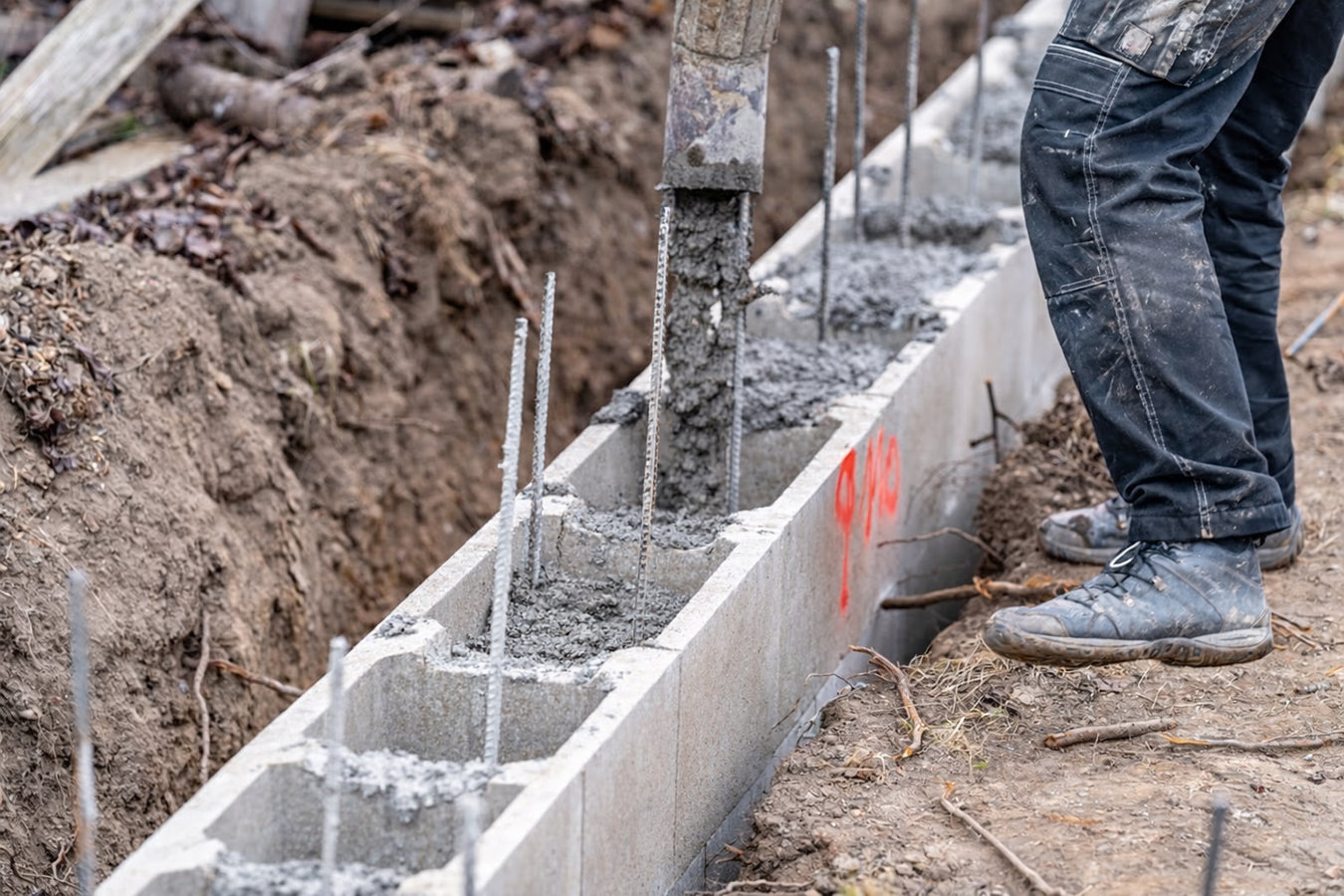
When Glenview's clay soil and freeze-thaw winters pull your foundation down, we lift it back up, address the drainage issue underneath, and handle the Village permit - so the repair holds.
Foundation raising in Glenview lifts a sunken concrete slab back to its original level by pumping material through small drilled holes beneath the slab until it rises, then patching those holes with concrete - most residential jobs are completed in a single day, often in just a few hours of actual lifting work.
If your driveway, garage floor, or patio has dropped noticeably on one side, the soil underneath has shifted. In Glenview, that shift is almost always caused by the same two things working together: clay-heavy glacial soil that swells and shrinks with every wet and dry cycle, and freeze-thaw winters that push that movement into overdrive from November through March. The concrete itself is often still structurally sound - it just needs to be lifted back to where it started.
If your slab has more serious cracking or your project involves an entirely new foundation, our slab foundation building service covers full installation from scratch. For projects that need precise concrete cuts before or after lifting work, concrete cutting is available as a complementary service.
Stand at one end of your driveway or garage floor and look down the length of it. If one section is noticeably higher or lower than the one next to it, the soil underneath has shifted. In Glenview, this often becomes visible in spring after the ground thaws and the clay beneath the slab has moved through another winter of freeze-thaw cycles.
If you notice water sitting against your home's foundation or collecting in low spots on your driveway after a heavy rain, the concrete has dropped and is now directing water toward your home instead of away from it. Glenview's clay soil does not absorb water quickly, so pooling near a foundation after rain is a warning sign worth acting on.
When a foundation shifts, the frame of your home shifts with it - even slightly. If interior doors that used to swing freely are now catching on the floor or frame, or if windows have become difficult to open, it can mean the foundation beneath that part of the house has moved. This is one of the subtler signs homeowners often dismiss as a weather issue before realizing the cause is structural.
Many Glenview homeowners first notice foundation movement in their garage, where the floor has gradually tilted toward the overhead door opening. This happens as the soil near the exterior edge of the slab erodes or compresses over time. If a ball placed on your garage floor rolls steadily toward the door, the slab has likely dropped on that side and should be evaluated.
We lift sunken concrete slabs throughout Glenview using two proven methods: traditional mudjacking, which pumps a cement-and-soil slurry beneath the slab, and polyurethane foam injection, which uses a lightweight expanding foam that cures faster and leaves smaller holes. Every job starts with an on-site assessment - we walk the slab, check drainage patterns around your home, and look at how far the concrete has dropped before recommending which approach fits your situation. We apply for the Village of Glenview building permit, coordinate the required inspection after the lift, and patch all drilled holes with concrete when the work is done. We also walk you through drainage steps - grading, downspout extensions, gutter maintenance - that help the repair last.
When a slab has dropped badly enough that raising is no longer the right answer, we provide honest guidance on replacement instead. If your project involves a full new foundation, slab foundation building covers complete installation from grade prep through pour and finishing. For projects that combine foundation work with concrete cutting - such as removing a damaged section before a targeted repair - we coordinate both scopes so you are not managing two separate crews.
Suits homeowners with sunken driveways, garage floors, or patios who want a cost-effective lift using the method that has been proven in Midwest conditions for decades.
Suits homeowners who need a faster cure time, smaller patch holes, or a lighter-weight fill material - particularly useful under slabs near existing drainage systems.
Suits homeowners who want to address the root cause of the sinking at the same time as the lift - the step that makes the difference between a lasting repair and a recurring problem.
Suits homeowners whose slab is too deteriorated to lift - we provide an honest assessment and a clear path to replacement rather than a lifting job that will not hold.
Glenview sits in Cook County, where winters regularly push the ground through repeated freezing and thawing cycles from November through March. Every time the ground freezes, it expands; every time it thaws, it contracts. Over years, that movement gradually dislodges the soil supporting your foundation. The clay-heavy glacial soil under most of the village makes this worse - clay expands when wet and shrinks when dry, so it is constantly moving beneath your slab in response to rain, drought, and snowmelt. A significant portion of Glenview's residential neighborhoods were built between the 1950s and 1980s, meaning many foundations have been through 40 to 70 years of this cycle. Homeowners in areas like Des Plaines and Skokie deal with the same soil and climate conditions, so this is not a problem unique to one street or one property.
Every spring, Glenview homeowners discover new cracks, uneven slabs, and sticking doors after the ground thaws and snowmelt saturates the soil. That creates a surge in demand for foundation contractors from April through June - if you notice a problem in early spring, contacting someone sooner rather than later means you are more likely to get on the schedule before wait times stretch out. The Village of Glenview also requires a building permit for structural foundation work, which means your repair is reviewed by a third party rather than taken on faith. That permit step adds about a week to the timeline but gives you documented proof the work was done correctly, which matters when it comes time to sell your home. For information on soil conditions in the broader region, the Illinois State Geological Survey publishes detailed information on Cook County glacial soils.
When you call, we ask where the problem is, how long you have noticed it, and whether there are visible cracks. Most reputable contractors will schedule a free on-site visit rather than quoting over the phone - the scope really does depend on what we find in person. We aim to respond within one business day.
A crew member walks the affected area, checks drainage patterns, and measures how far the slab has dropped. This visit usually takes 30 to 60 minutes. We explain what we found and what we recommend - not just hand you a number.
We apply for the Village of Glenview building permit before any work begins. That typically adds about a week to the timeline. Once approved, we schedule the lifting work and keep you informed - you should not need to chase us for updates.
The crew drills small holes, pumps material beneath the slab until it rises to level, and patches the holes with concrete. The actual lifting often takes just a couple of hours. After the work, the Village schedules a final inspection - we coordinate that so you do not need to manage it.
Free on-site estimates. Permit handling included. We respond within one business day.
(224) 529-2097We assess why the slab sank before recommending a lift - not just pump material and leave. If the underlying drainage problem is not addressed, the slab will sink again. That conversation about grading, downspouts, and soil saturation is part of our standard assessment, not an upsell.
The Village of Glenview requires a building permit and final inspection for structural foundation work. We handle the entire permit process - application, coordination, and inspection scheduling - so you have documented proof the job was done correctly. That documentation matters when you sell your home.
Cook County's glacial clay soil behaves differently than most soil types - it expands when wet, contracts when dry, and moves with every freeze-thaw cycle. We factor that into our lifting approach, our material selection, and our drainage recommendations, because a lift done without accounting for local soil conditions rarely lasts. For more on Cook County soil conditions, the Cook County Soil and Water Conservation District is a useful reference.
We walk you through the assessment, explain what we found under the slab, and tell you plainly what we recommend and why. If replacement makes more sense than lifting for your specific slab, we say so - even if that means a different scope of work. You make an informed decision, not a leap of faith.
Foundation raising done right in Glenview is about more than just lifting concrete - it is about understanding what caused the drop, fixing it, and doing the paperwork correctly so the repair holds up and your home's records stay clean. That combination is what we bring to every job.
Precision saw cuts for damaged slab removal, utility trenches, and egress openings - often the first step before a targeted slab repair.
Learn MoreComplete slab installation from grade preparation through the finished pour - the right path when a foundation is too deteriorated to lift.
Learn MorePermit slots fill up fast each spring - call today to lock in your estimate and get on the schedule before the rush.