
Loading...
Serving Glenview, IL and surrounding areas. (224) 529-2097
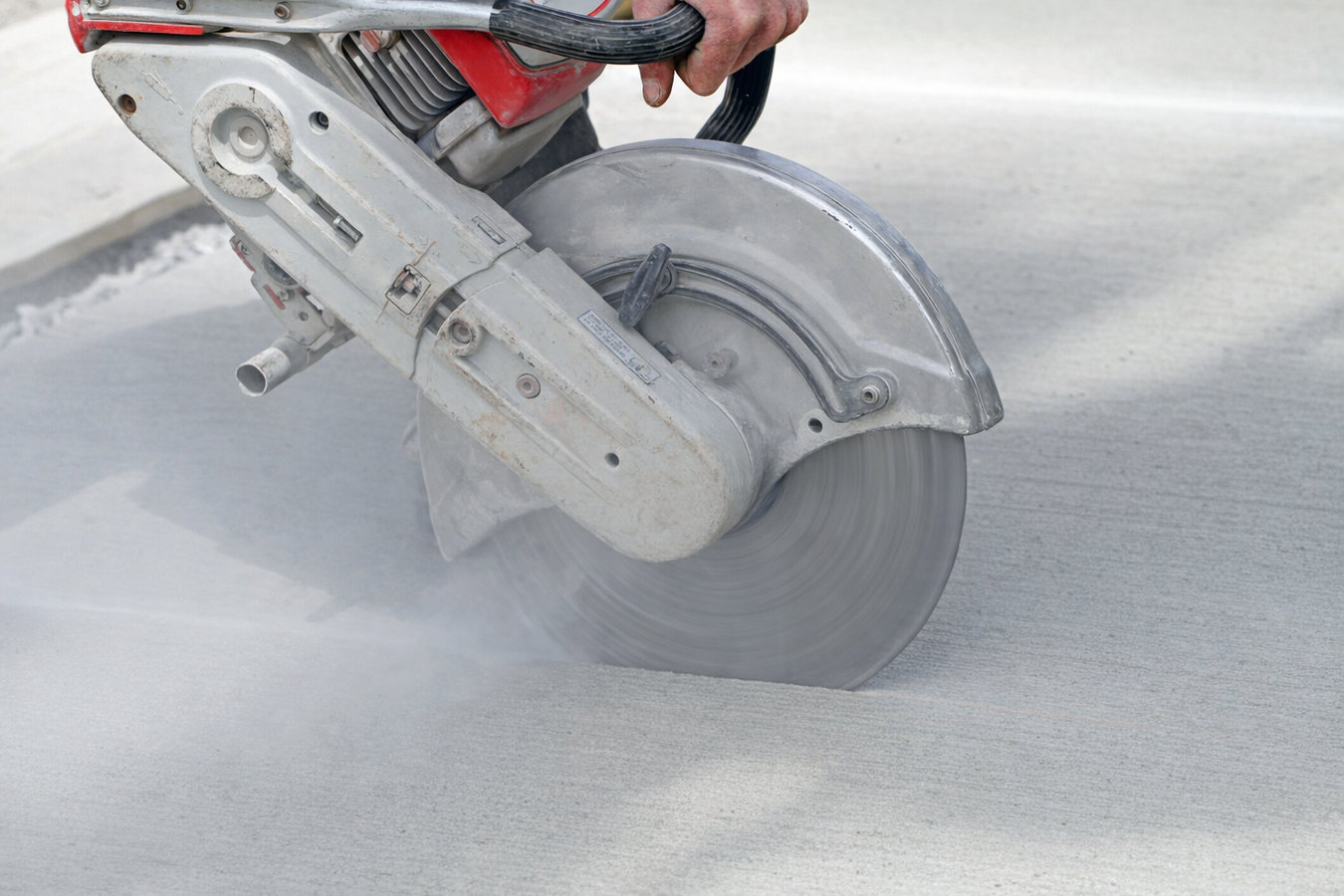
From cracked driveway panels to basement egress openings and utility trenches, we cut concrete precisely, mark utilities first, pull permits when needed, and leave your site ready for the next step.
Concrete cutting in Glenview uses diamond-tipped saw blades to slice through hardened concrete cleanly and precisely - creating openings for utilities, removing damaged driveway panels, or opening basement walls for egress windows - with most straightforward residential jobs completed in a single day.
Concrete cutting is not the same as demolition. A jackhammer breaks concrete apart; a concrete saw cuts it cleanly along a controlled line. That distinction matters when the cut edge is going to be visible in a finished surface, when the work is close to structures you want to keep, or when precise dimensions are needed for a window opening or utility trench. Glenview's older housing stock - much of it built in the 1950s through 1980s - means many slabs here are thicker and may contain steel reinforcement, both of which affect how the cut is approached and priced.
Concrete cutting often pairs directly with other concrete work. After a panel is cut out, it typically needs to be replaced with a new pour - our concrete driveway building service handles that step. For larger surface work in parking areas or commercial lots, our concrete parking lot building team coordinates cutting and replacement as part of the same project scope.
If you have patched the same crack two or three times and it keeps reopening, the problem is not the surface - it is movement happening underneath. In Glenview, the clay soil beneath many slabs shifts with the seasons, and no patch will hold permanently over an unstable base. Cutting out the damaged section and replacing it cleanly is often the only lasting fix.
When one section of your driveway or walkway sits higher or lower than the sections next to it, that displacement is a trip hazard. Glenview's freeze-thaw winters and clay soils are a common cause. Cutting out the affected panel is the first step toward leveling and replacing it safely.
If you are finishing your basement or adding a window for light and emergency exit, a contractor needs to cut through the concrete foundation wall to create the opening. This is one of the most common reasons Glenview homeowners call a concrete cutting crew - and it requires a permit from the Village before work begins.
When a plumber or HVAC contractor needs to access the area beneath your basement floor or garage slab, they need a concrete cutter to open a trench first. If you have been quoted on a basement bathroom addition or a new utility line and the contractor mentioned cutting the floor, that is exactly what this service covers.
We handle concrete cutting for driveways, garage floors, basement walls, patios, and utility trenches throughout Glenview. Every job starts with an on-site estimate - we look at the thickness of the slab, check for visible steel reinforcement, and assess how accessible the area is for our equipment. Before any cutting that reaches ground level, we contact JULIE to have underground utility lines marked. For jobs that require it, we pull the Village of Glenview building permit and coordinate any required inspections so your project stays on track. We use diamond-blade saws with water cooling to control silica dust during the cut, and our crew cleans up concrete slurry and hauls away the cut pieces when the job is done. Ask upfront whether debris hauling is included in your quote - we are clear about what is and is not in scope.
Concrete cutting is almost always the first step in a larger project. After a driveway panel is cut out, it needs a new pour - our concrete driveway building service picks up where the cut leaves off. For commercial or multi-bay projects, concrete parking lot building combines cutting and replacement into one coordinated scope, so you are not managing separate contractors for each phase.
Suits homeowners removing damaged driveway panels, cutting utility trenches in garage floors, or sectioning a slab for targeted replacement.
Suits homeowners adding basement egress windows, new doorways, or utility penetrations through concrete foundation walls.
Suits homeowners whose existing concrete lacks proper control joints, causing random cracking - cutting planned joints gives future movement a predictable path.
Suits homeowners whose plumber, HVAC contractor, or electrician needs a clean trench cut through an existing slab to run new lines beneath it.
Glenview's climate zone means concrete slabs here go through dozens of freeze-thaw cycles every winter - temperatures drop below freezing at night and rise above it during the day, water gets into small cracks, freezes, expands, and makes those cracks bigger. Over several winters, what started as a surface crack can become a separated panel or a full displacement. That pattern of damage is why concrete cutting is such a regular service in the area - it is not just about big renovation projects but also routine repair work that stems directly from the local climate. Homeowners in nearby Evanston and Des Plaines deal with the same conditions, so this is a regional reality, not a problem specific to one neighborhood.
The older housing stock in Glenview adds another layer of complexity. A significant share of homes were built in the 1950s through 1970s, and the concrete from that era may be thicker, contain older-style steel reinforcement, or have been poured with materials that behave differently under a saw blade than modern concrete. Illinois state law also requires contractors to contact JULIE - the state's free utility-marking service - before any cut that reaches the ground. In a developed suburb like Glenview, gas lines, water mains, and electrical conduits run under many driveways and patios that look completely ordinary from above. A contractor who mentions JULIE before you do is showing you they know what they are doing. For dust control standards during wet cutting, OSHA's silica guidelines set the baseline for responsible practice.
We ask what you are trying to accomplish, where the concrete is, and roughly how old your home is. This helps us understand whether the job is straightforward or whether steel reinforcement, a permit requirement, or other factors need to be sorted out before scheduling. We respond within one business day.
We look at the slab thickness, check for visible steel, assess site access for equipment, and note anything that could affect the timeline or cost. This visit is your chance to ask what is included in the quote and what is not - we answer plainly before any work is scheduled.
If your project requires a permit, we pull it from the Village of Glenview before scheduling the work. We contact JULIE to have underground lines flagged before any cutting begins. You may notice small flags or paint marks in your yard a day or two before the crew arrives - that is the marking process at work.
The crew sets up, marks cut lines, attaches water cooling to the saw, and makes the cuts. The cutting itself is loud but controlled. Afterward, we clean up the wet slurry, haul away the cut pieces, and leave the work area clear. Before we leave, we tell you what the site needs before the next trade arrives.
Free on-site estimates. JULIE marking and permits handled. We respond within one business day.
(224) 529-2097In a built-out suburb like Glenview, gas lines and water mains run under a lot of surfaces that look perfectly ordinary from above. We contact JULIE before any cut that reaches the ground - not because we have to, but because hitting a utility line causes real damage. You should never have to ask about this step.
Glenview's building department requires permits for many concrete projects, and a missed permit can stop a renovation or create problems at resale. We handle the permit process for projects that need it - application, coordination, and inspection scheduling - so your timeline stays on track. The Village of Glenview Community Development Department is the authority for permit requirements on your specific project.
Many Glenview slabs were poured in the 1950s through 1970s - thicker, potentially reinforced with older-style steel, and sometimes more brittle than modern concrete. We ask about your home's age, adjust our approach for the material we are cutting, and work at the pace the slab requires to avoid cracking beyond the cut line.
Concrete cutting is usually the first step in a larger project - the opening still needs to be framed, the trench still needs to be filled, or the new panel still needs to be poured. We leave the site clean, tell you what needs to happen next, and make sure the next trade can start without dealing with leftover debris or slurry.
Concrete cutting in Glenview requires more than just showing up with a saw - it means knowing the soil, knowing the permit process, knowing what is underground, and knowing how older concrete behaves under a blade. That combination of local knowledge and careful process is what separates a clean job from a costly mistake.
New driveway pours after panel removal - the natural next step once the damaged section has been cut out and the subbase is ready.
Learn MoreFor commercial or multi-bay projects where cutting and replacement are coordinated as a single scope rather than managed separately.
Learn MoreWe handle the permits, mark the utilities, and leave your site ready for what comes next - call now to schedule your free estimate.