
Loading...
Serving Glenview, IL and surrounding areas. (224) 529-2097
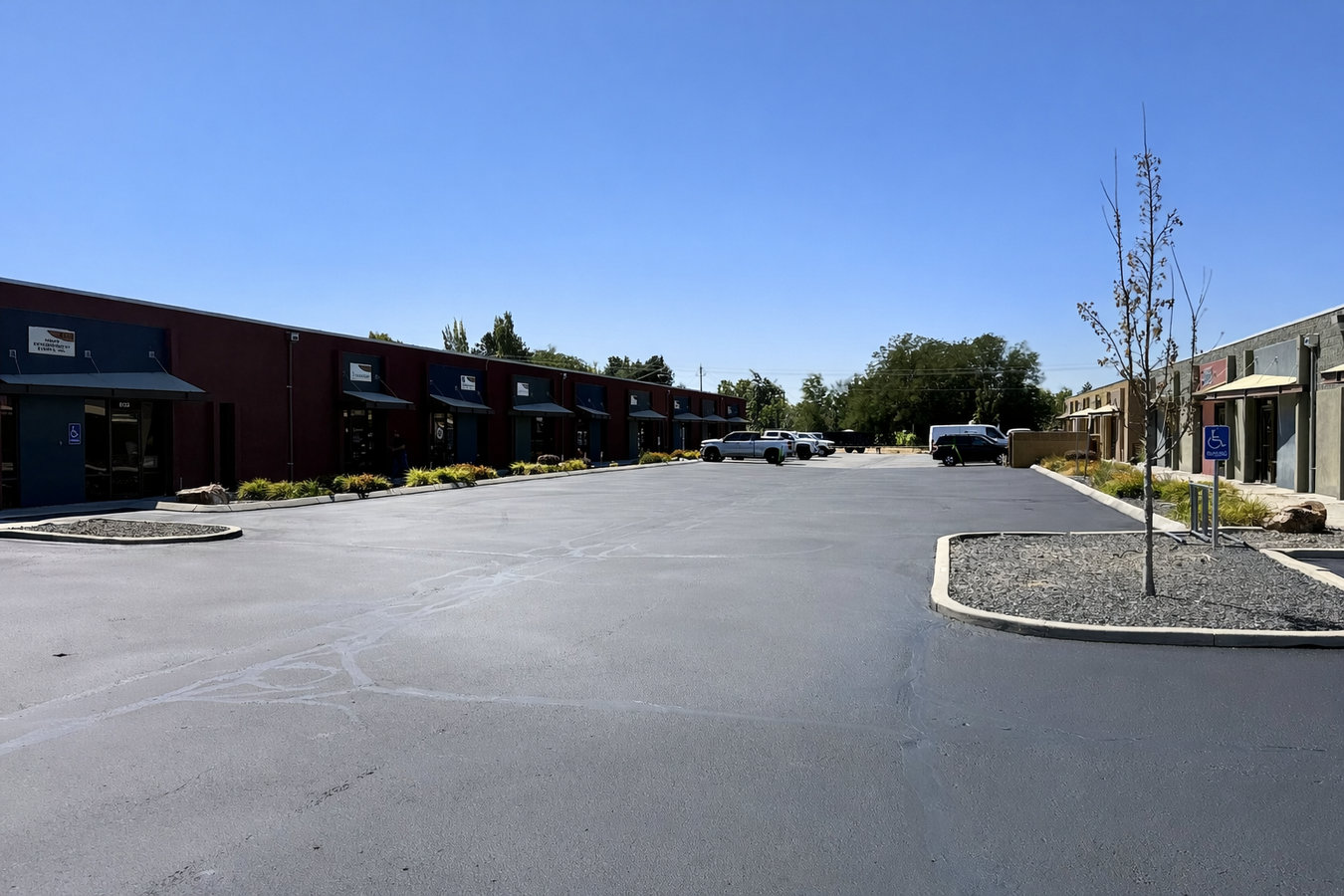
A parking lot that cracks after two winters was built wrong from the start. We grade, base, and pour concrete lots designed for Glenview's freeze-thaw cycles and Cook County stormwater rules.
Concrete parking lot building in Glenview means removing the old surface if there is one, grading the ground so water drains correctly, compacting a crushed stone base, pouring concrete in sections with control joints, and coordinating Village permits and inspections - most residential and small commercial lots take four to seven days of active work spread over one to two weeks.
If you have a gravel area that turns muddy every spring, a crumbling asphalt surface, or an unpaved lot that no longer serves your property, a concrete replacement solves the problem for decades rather than seasons. Glenview's clay-heavy soil and hard freeze-thaw winters mean the difference between a 30-year lot and a 5-year lot comes down almost entirely to how the base is built before any concrete is poured.
For properties that also need a dedicated vehicle approach off the street, our concrete driveway building service can be scoped alongside the lot work and priced together in a single estimate.
If your existing parking area has cracks that have grown wider or longer after each winter, the base underneath has been compromised by Glenview's freeze-thaw cycles. Patching individual cracks can buy a season, but once the base is failing, the cracks keep coming back. Eventually a full replacement is the only lasting fix.
Standing water on a parking surface means drainage was not designed correctly or has failed over time. In Glenview, where spring rains can be heavy and snowmelt happens quickly, pooling water accelerates surface damage and creates a slip hazard in winter. A new lot graded from scratch solves the drainage problem at the source.
When the top layer of concrete starts to peel or flake away - a process called spalling - it usually means the original surface was not built to handle the salt and freeze-thaw stress common in northern Illinois winters. Once spalling starts, it spreads, and no amount of sealing will reverse it.
If you have a gravel area or unpaved lot that turns unusable every March and April, that is a clear sign a permanent concrete surface would serve you better. Glenview gravel lots require constant regrading and replenishment, and the mud season after snowmelt can make them nearly unusable for weeks at a time.
We build concrete parking lots for residential properties, small commercial sites, and multi-unit properties throughout Glenview. Every project starts with a site assessment to understand how water currently drains, what is under the existing surface, and how the lot will be used. From there we design the layout - including edge locations, slab thickness, base depth, and control joint spacing - before pulling the required Village of Glenview permit. Site prep includes demolishing and hauling away the old surface, grading the ground for positive drainage, and compacting a crushed stone base layer. Slabs are 4 to 6 inches thick depending on vehicle loads expected, reinforced with steel where needed, and finished with straight control joints cut at intervals that match the slab dimensions.
When a property needs both a lot and a connected approach from the street, we link the structural footing work and flatwork into a single project scope. This saves a separate mobilization cost and ensures the drainage design accounts for the full paved area at once. All permits, inspections, and final walkthroughs are coordinated by our crew.
Suits properties converting a gravel, dirt, or grass area to a permanent paved surface for vehicles.
Suits properties where the existing surface has failed beyond what patching can address, requiring full removal and rebuild.
Suits properties that need more organized parking capacity and want to extend or reconfigure an existing paved area.
Suits properties where stormwater management is a concern, requiring catch basins, swales, or a graded perimeter as part of the design.
Glenview sits squarely in the Chicago metro freeze-thaw zone, where ground temperatures cross the freezing point dozens of times each winter. The clay-heavy glacial soil under most of the village holds moisture and shifts with every wet-dry cycle through the year. A parking lot poured without a properly compacted base and correctly spaced control joints will start cracking within a few winters under those conditions. The Village of Glenview also requires permits for new impervious surfaces and may require a site plan that shows stormwater management - Cook County has watershed rules that limit how much additional runoff a new paved area can send into the storm system. Getting the design right upfront avoids failed inspections and costly redesigns after the pour.
We serve properties throughout Glenview and the surrounding communities. In Des Plaines and Schaumburg, we handle the same freeze-thaw and clay-soil challenges that Glenview properties face, and our permit and drainage process is adapted for each municipality. If you are not sure whether your project needs a permit or a drainage feature, the on-site estimate is the right place to start - we will walk through it with you.
We respond to all new project inquiries within one business day. We schedule a free on-site visit before giving any price - a parking lot is impossible to quote accurately without seeing the access, existing surface, and drainage conditions in person.
After you approve the written estimate, we apply for the Village of Glenview permit - typically approved within one to two weeks. Once the permit is in hand, we schedule your start date. In peak season, plan for a few weeks of lead time.
The crew removes the old surface, grades the subgrade for drainage, and compacts a crushed stone base. This is the most important part of the job - a day or two of prep work that determines how the lot performs for the next 30 years.
The pour usually takes one day for a residential or small commercial lot. The lot is off-limits to vehicles for at least seven days after the pour. We do a final walkthrough, point out the control joints, and give you straightforward care instructions before we leave.
Free on-site estimate. No obligation. We handle permits and inspections.
(224) 529-2097Every lot we build includes a compacted crushed stone base engineered for Glenview's freeze-thaw cycles and clay soil - not a minimum-cost layer that looks adequate on paper. The base is the reason a lot lasts 30 years instead of five.
We pull the required Village of Glenview permit on every applicable project and schedule the inspection - this is not an add-on. A permitted lot is on record and protected, which matters when you sell or refinance. A contractor who suggests skipping this step is one to avoid.
We assess how water moves across your property before we set a form. The lot is graded so rain and snowmelt flow away from your building and off the surface - not toward your foundation. This is a design decision made upfront, not something fixed after the fact. The American Concrete Pavement Association outlines the pavement design standards our crews follow.
Our written estimates itemize base work, concrete, permits, and site cleanup. If something changes after we start - like unexpected buried material or a drainage issue we did not find until excavation - we talk to you before doing extra work, not after.
Every parking lot project we take on in Glenview gets the same process: a real on-site assessment, a detailed written quote, permitted work, and a final walkthrough. That is how we keep getting called back when the same customer needs a driveway or a set of concrete steps.
Structural footings dug below Glenview's 42-inch frost line for decks, additions, and any structure that needs a foundation before framing starts.
Learn MoreNew concrete driveways built with the same base prep and drainage design we use on parking lots, scaled to residential approach dimensions.
Learn MoreConstruction season fills up fast - reach out now to lock in your project before the best scheduling slots are gone.